
April 2026
Overview
This release introduces the PSC Inspections Dashboard, consolidating Port State Control records from 9 global regimes into a single fleet-wide view. It also adds a defect-tracking MCP server, a document translation skill, and cross-provider context editing. Chat streaming gains a final response marker, VM authentication and API authorization are extended, and model defaults are raised to Sonnet 4.6. Fixes stabilise streaming, sessions, and the chat interface. Infrastructure security is tightened around the edge proxy and audit logs.Fixes and enhancements
These updates cover what you see in chat and documents, plus streaming, sessions, and agent connectivity—grouped together because many changes span UI and behavior.Interface and chat
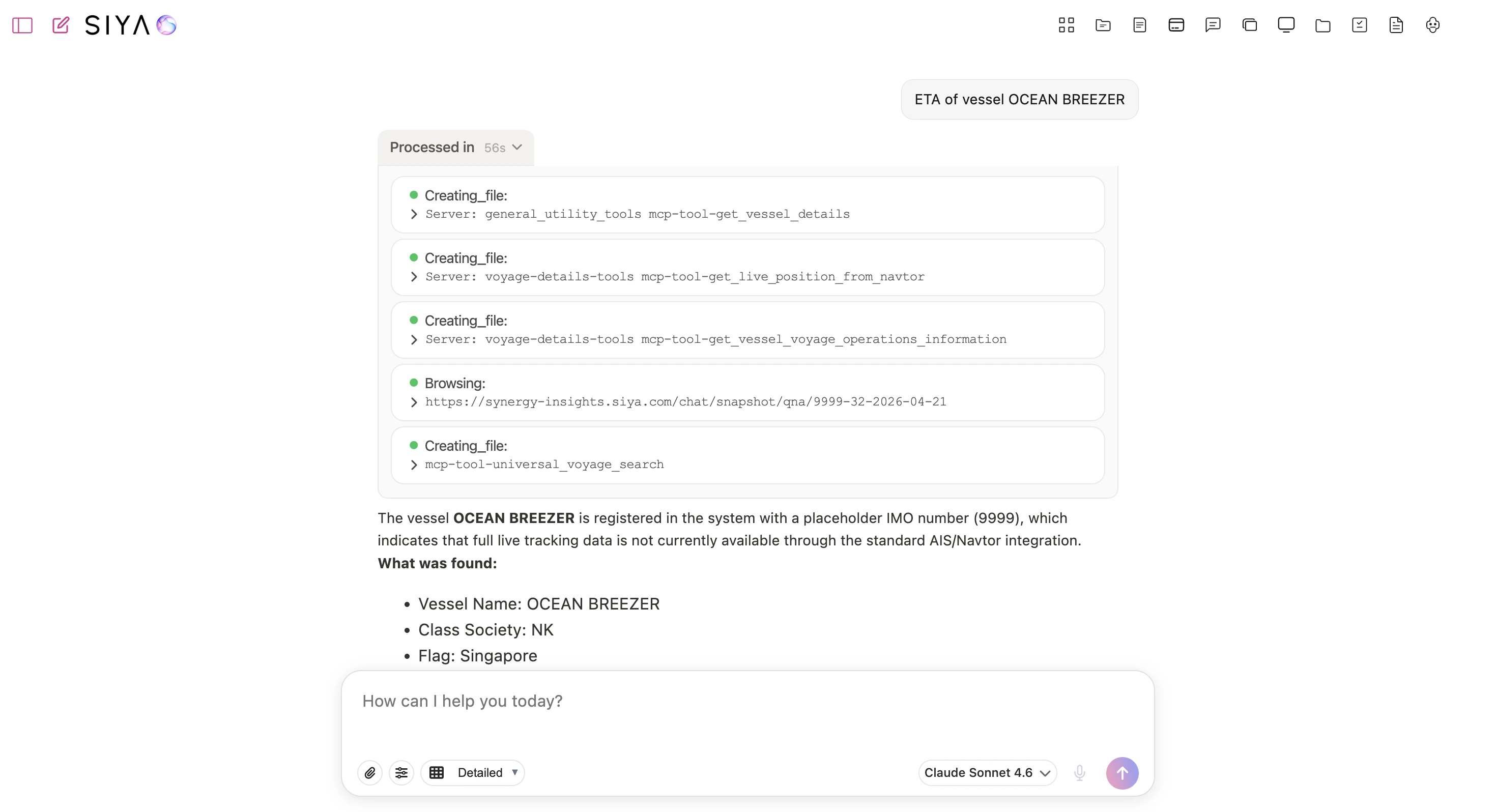
- Chat actions — Action groups can be collapsed, with a subtle loading state on first render..
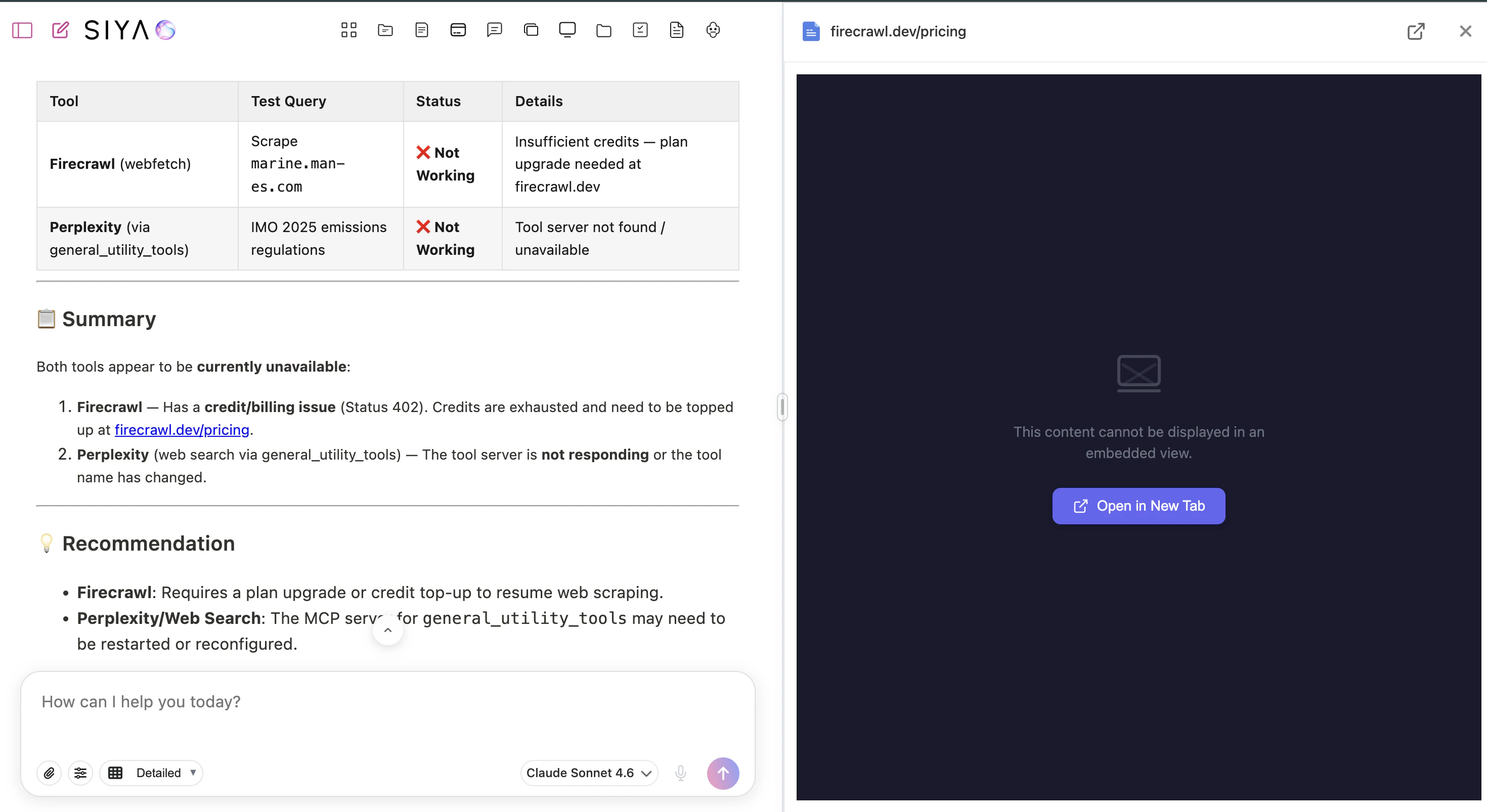
- Artifact popup — Iframe handling in the artifact popup manager is more reliable.
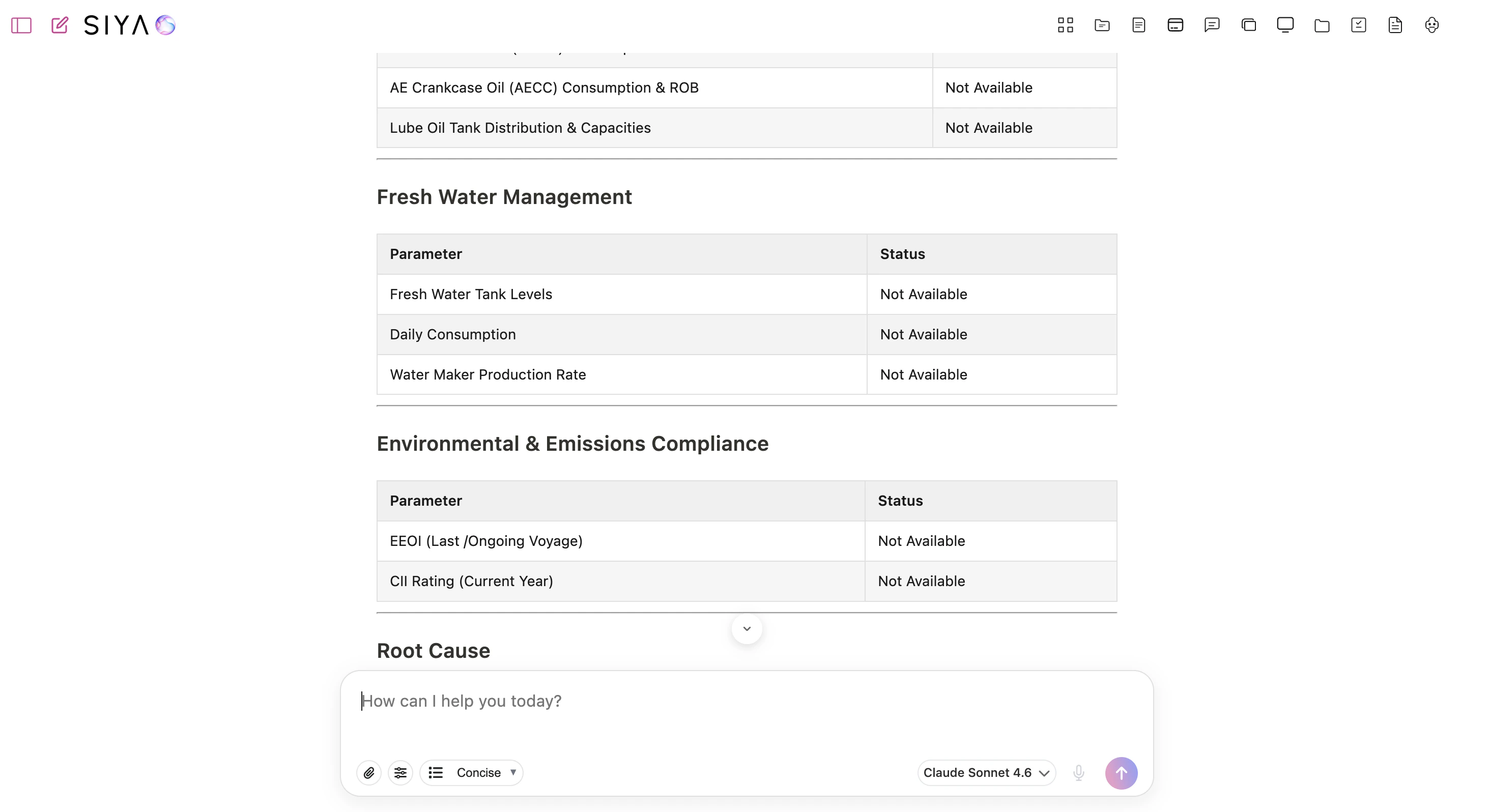
- Streaming tables — Table streaming is steadier: columns stay aligned, links are cleaned up, and layout glitches are reduced.
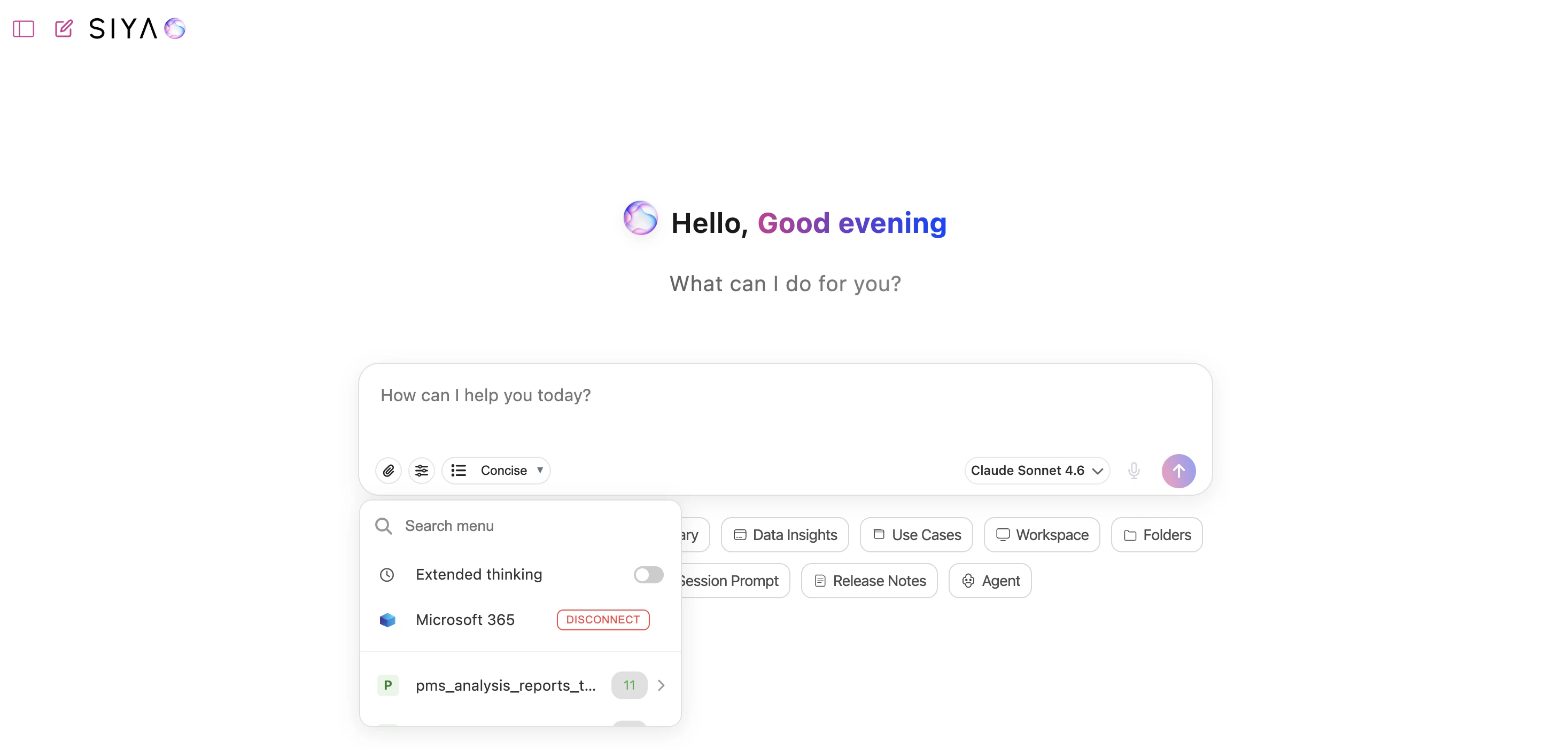
- MCP picker — MCP dropdown height is adjusted for easier scanning.
Streaming, sessions, and agent behavior
- Send while busy — You cannot send a new message while a reply is streaming or while files are still uploading.
- SSE ordering — title_update is emitted before system_end, and duplicate system_end events are removed.
- Refresh & stream reliability — Refreshing the page no longer duplicates the last user message and assistant reply; the stream can resume from the last event ID when you navigate within chat, reducing missing content; and streamed chunks are stored so a refresh can recover in-progress replies more reliably.
- Custom titles — Running state and duration persist correctly for conversations you have renamed.
- Long outputs — Retries for “max tokens” are replaced with deliberate truncation handling.
- Stop control — The stop control stays available while a stream-post request is still running.
- Password fields — Password requirement hints reset when the field is cleared.
Improvements & new features
- Defect MCP (NYK) — A defect-tracking MCP server is available for NYK.
- Document Translator skill — Translate multi-page documents without splitting the job by hand.
- Context editing for every provider — Client-side context editing works across LLM providers, including Gemini.
- Final response marker — A dedicated SSE marker identifies the last model reply so the chat UI can collapse and label that turn consistently.
- VM owner authentication — JWT-based middleware verifies VM ownership for protected routes.
- API authorization — The client sends an authorization header on frontend API calls so authenticated requests are consistent.
- Document tabs — Document views include control to open content in a new tab when that helps your workflow.
- Model defaults — Sonnet 4.5 fallbacks are raised to Sonnet 4.6 so upgrades stay aligned with current model tiers.
Data Engineering
PSC Inspections Dashboard
A new Port State Control intelligence system that consolidates inspection records from 9 global PSC regimes — Paris MoU, Tokyo MoU, Indian Ocean MoU, Black Sea MoU, Mediterranean MoU, Caribbean MoU, Abuja MoU, Latin America MoU (Viña del Mar), and USCG — into a single fleet-wide view with drill-down by fleet, group, and vessel. Coverage note: Data for Riyadh MoU is not yet available in SIYA. Data for Latin America MoU (Viña del Mar) is available from 1 Jan 2026 onwards. KPI note: For Tokyo, Indian, Abuja, and Latin America MoUs only initial inspections are considered; for all other MoUs, all inspection types are counted.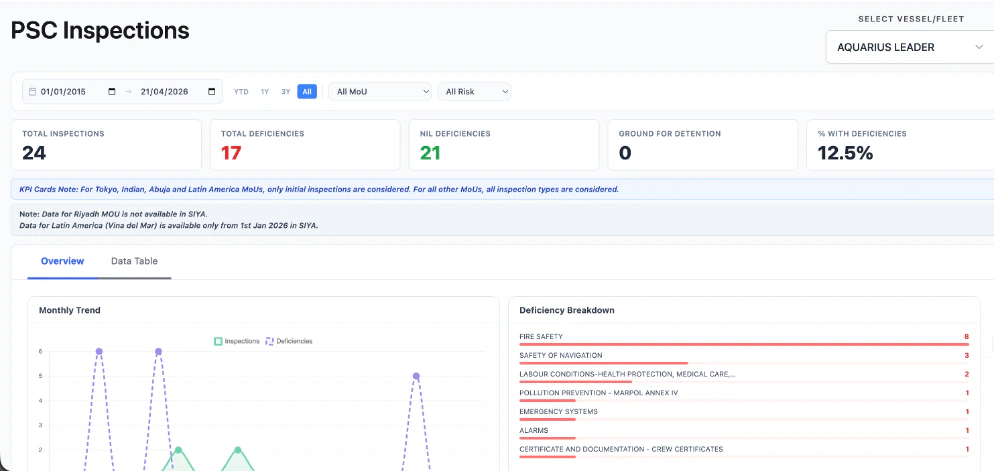
- Five headline KPIs: Total Inspections, Total Deficiencies, Nil Deficiencies, Ground for Detention, % With Deficiencies
- Vessel, fleet, or company-wide scope selection
- Date shortcuts (YTD / 1Y / 3Y / All) with custom range support
- MoU and Risk-profile filtering
- Overview, Data Table, and No PSC Data tab views
- CSV export
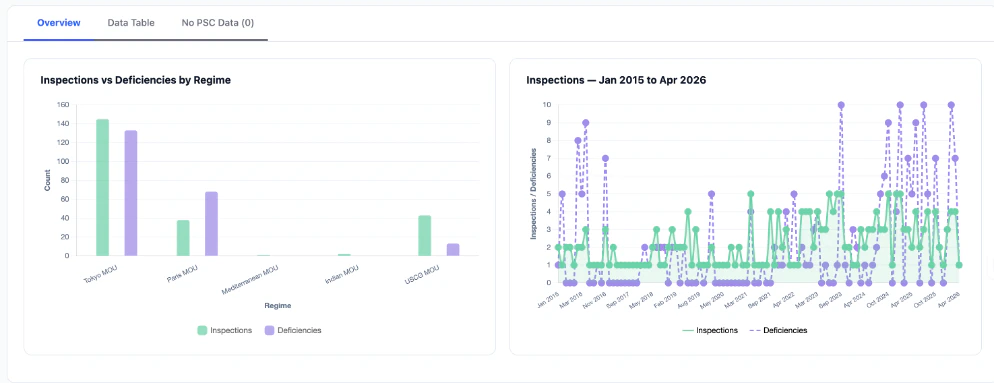
- Inspections vs Deficiencies by Regime comparison chart
- 12-month rolling inspection & deficiency trend
- Top deficient vessels and top deficiency codes
- Cross-regime inspection de-duplication
- Follow-up inspection tracking for Tokyo, Indian, Black Sea, and Abuja MoUs
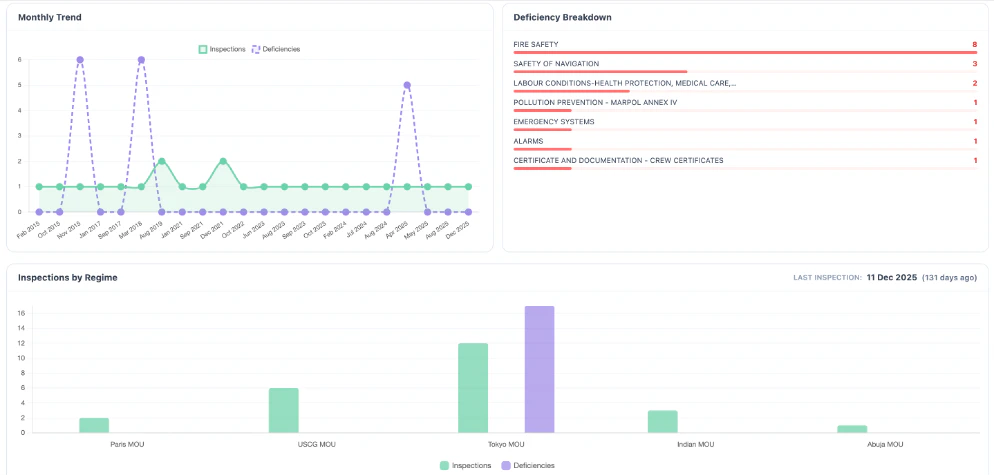
- Full-history monthly inspection & deficiency trend
- Ranked deficiency breakdown per vessel
- Per-MoU inspection & deficiency totals
- Last inspection date with days-since indicator
- Direct links to official MoU inspection records
- Three scopes: full company fleet, custom fleet/group, or individual vessel
- Respects each user’s data-access profile (company, fleet, group, or associated vessels)
- Daily automated refresh from official PSC registries
MCP Servers
Defect & Inspection Tools MCP Server
A new MCP server connection brings vessel inspection and defect data directly into SIYA. The server is designed to cover the full spectrum of inspection and defect workflows over time — Port State Control (PSC) capabilities are available in this release, with additional inspection types to follow. Available in this release:- Vessel PSC inspections — Retrieve the most recent PSC inspection details along with the full historical record of inspection dates for a specific vessel using its IMO number.
- Fleet PSC inspections — Pull PSC inspection details and historical records across all vessels in a fleet in a single request, making it easy to spot trends, recurring deficiencies, and inspection patterns at the fleet level.
“Show me the last PSC inspection for IMO 9876543” “List PSC deficiencies across the fleet from the last 12 months” “Which vessels were inspected most recently?”— answered directly with the relevant context pulled in automatically. More inspection and defect types will be added to this server in upcoming releases.
Security
- Edge and audit — Unused nginx configuration is removed, and access to system audit logs is restricted to address a penetration-test finding.